

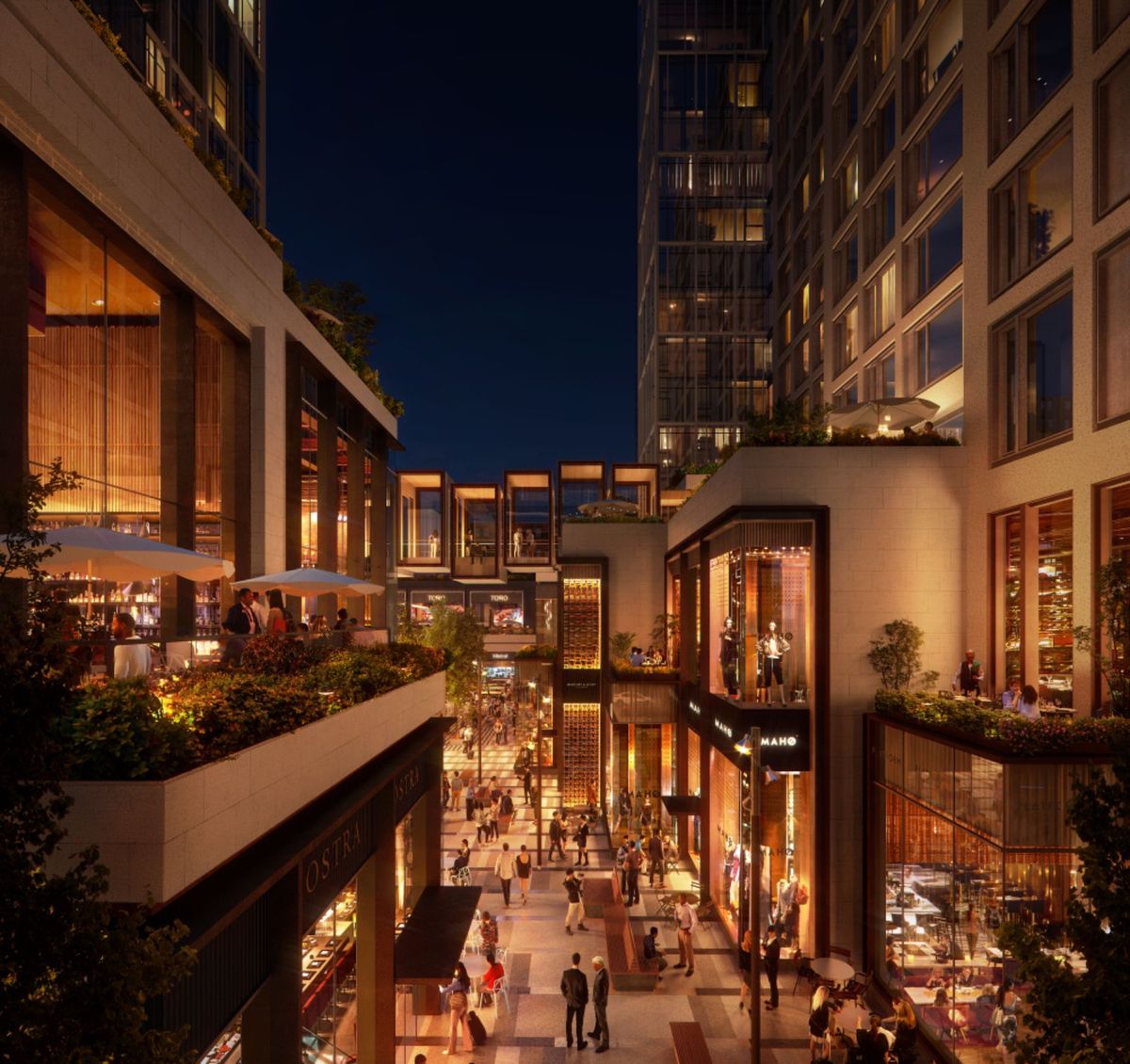
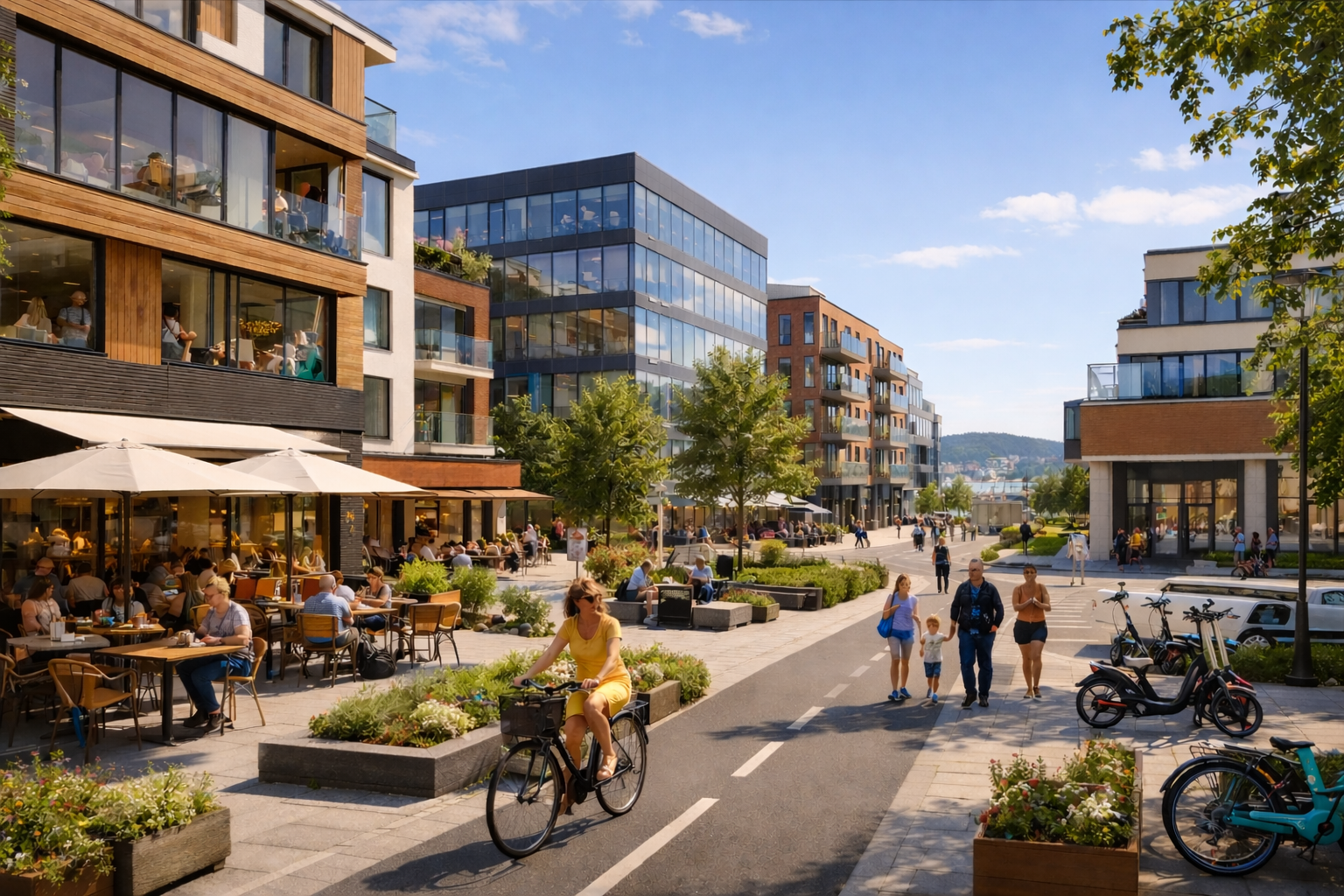


With parametric urban planning, a Magic Steel frame without load-bearing internal walls and project-level digital twins, EdenRise designs 15-minute cities where housing, work, services, care, retail and culture are within walking distance.
Each building can be homes today, offices and clinics tomorrow – without heavy, carbon-intensive rebuilds. Instead of single-use zones, we design flexible mixed-use districts: 40% residential, 25% workspaces, 15% retail and food, 10% education and health, 10% production and services – adjustable by site and context.
This creates vibrant districts where jobs, daily life and urban culture intertwine, held together by a common parametric design logic.
Through parametric control the same core logic can be deployed in different cities. The expression can adapt to local culture, landscape and materiality; ESG parameters, programme mix and mobility patterns can be fine-tuned per site.
The EdenRise platform acts as a SaaS layer for urban development. Every new project becomes data that makes the next one better.
The vision: cities that are not just built, but continuously computed and adjusted to life itself.
EdenRise districts create more local jobs and shorter commuting distances support small businesses, studios and micro-manufacturing, and enable sharing concepts: coworking, shared kitchens, creator spaces, and community terraces.
The parametric logic can also secure a share of subsidised or regulated housing integrated into the same blocks, instead of segregated pockets on the edge.
In Eden Rise developments, ninety five percent of apartments receive daylight from at least two façades, and each resident has access to an average of approximately thirty square meters of public green space.
The urban layout prioritises car free child loops, defined as continuous walking routes that allow children to move safely without crossing vehicle traffic, with parks, pocket parks, and courtyards integrated into rain garden systems and stormwater management strategies.
Vertical gardens, rooftop landscapes, and green courtyards are embedded directly into the architectural design rather than added as decorative elements.
Eden Rise uses a digital twin as the core planning and operating framework for its developments. Through algorithmic massing, the system balances density, daylight access, and sight lines while optimising program mix to support local employment and essential services.
It integrates flow simulations covering pedestrian movement, children’s routes, seniors, deliveries, and micro mobility, which are directly coupled to energy and climate models to secure ESG performance.
The same computational engine generates massing models, façade families, and quantified outputs such as cost per square meter, carbon footprint, energy use, and daylight factors, providing structured decision support for municipalities, investors, and residents. Across both development and operational phases, the digital twin functions as the operating system of the district, continuously linking spatial design, performance metrics, and long term management.
Floorplans can be reconfigured with minimal intervention entire levels can shift between housing, offices, co-working, care facilities, education, and restaurants and services.
The building can follow market demand over time instead of becoming obsolete after a decade.
This is mixed-use as a system, not as a buzzword. The architecture is designed from the outset to tolerate change, technically, socially and financially.
The parametric framework is built around:
- A 15-minute living radius: housing, groceries, school, healthcare and basic services within ≈800 m walking distance
- 5-minute micro-clusters: local nodes with cafés, coworking, play areas and daily services a few minutes from the front door
- Car-free interior zones prioritising walking and micro-mobility, with lower noise and cleaner air
The result is neighbourhoods that are both dense and human-scaled: height, density and mix are optimised digitally for light, wind, views andsocial interaction.

Eden Rise sees the city as a field of interrelated systems: streets, courtyards, façades, programmes and ecology, rather than isolated objects.
read more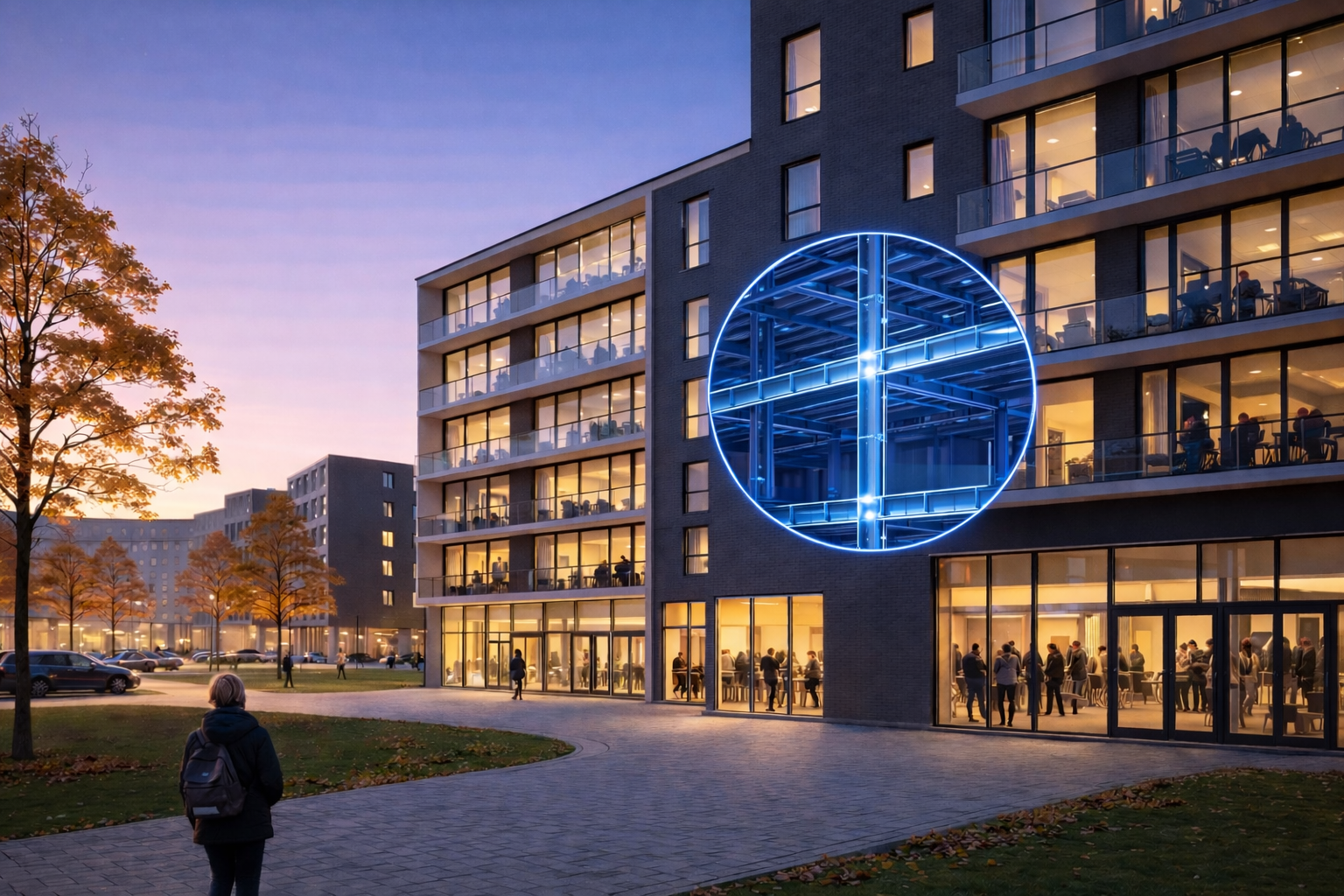
At the core of the Eden Rise architecture is the MagicSteel frame, a non-modular, factory-cut, non-combustible steel structure with no load-bearing internal walls, made from 100% recycled steel.
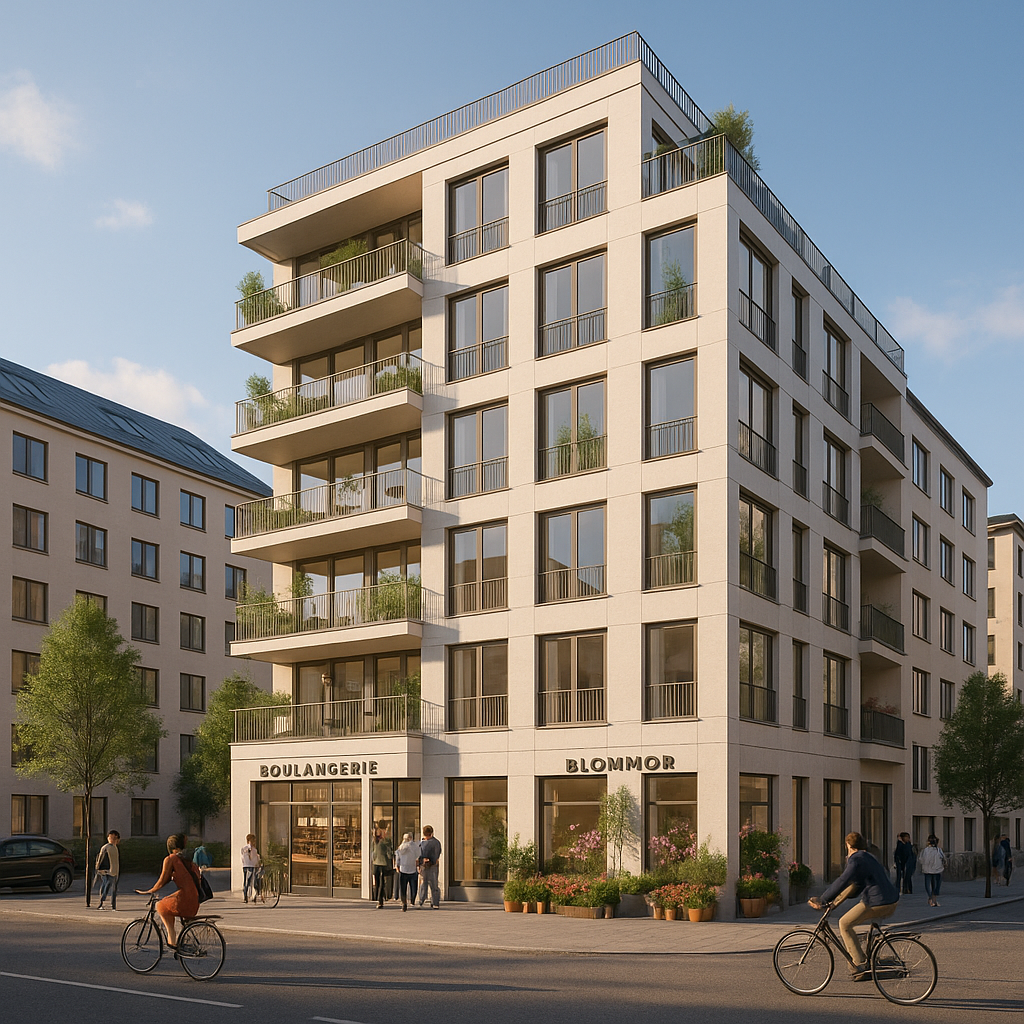
Eden Rise uses a digital twin as the core planning and operating framework for its developments. Through algorithmic massing, the system balances density, daylight access, and sight lines while optimising program mix.
read more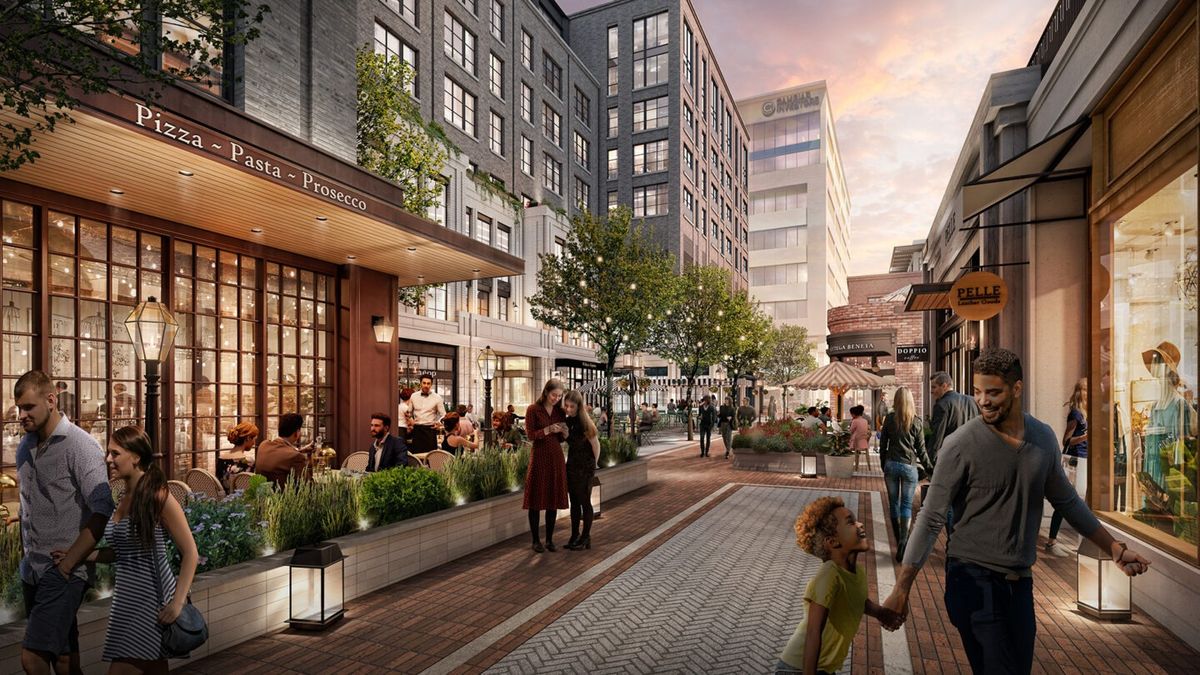
Eden Rise districts are designed to be family-friendly, safe and green by default. Our measures improve local microclimate conditions, support resident wellbeing, and strengthen the everyday sense of home.
read moreArchitecture should be used also as a social and economic tool to create an inclusive environment that encourages human interaction and a healthy work-life balance.
EdenRise Architecture and concepts are designed to be replicable without feeling copy-pasted, to be smoothly integrated across borders and cultures.

Birger Jarlsgatan 57A
113 56 Stockholm
Sweden